Forging new chapters in China-U.S. people-to-people friendship

By He Yin, People’s Daily

The 2025 Kuliang Forum, themed “Echoes of History,” was recently held in New York. 

In this special year marking the 80th anniversary of the victory in the Chinese People’s War of Resistance Against Japanese Aggression and the World Anti-Fascist War, representatives from various sectors of China and the United States came together to commemorate the historical period when the two nations stood together in the fight for world peace. 

Drawing on the legacy of Kuliang — an enduring symbol of China-U.S. people-to-people friendship — participants reaffirmed their commitment to strengthening mutual understanding and friendship.

The Kuliang story, personally promoted by Chinese President Xi Jinping, exemplifies the longstanding bond between the Chinese and American peoples. Xi has previously sent congratulatory letters to “Bond with Kuliang: 2023 China-U.S. People-to-People Friendship Forum” and to “Bond with Kuliang: 2024 China-U.S. Youth Festival,” underscoring the story’s continued relevance in today’s bilateral relations.

In recent years, “Kuliang Friends” and other supporters of China-U.S. friendship have actively preserved and promoted Kuliang’s legacy. Initiatives such as root-seeking visits and cultural exchanges, including “Bond with Kuliang: 2025 China-U.S. Youth Choir Festival,” have deepened mutual understanding and friendly exchanges between the two peoples.

The ever-growing and enduring Kuliang story shows that despite differences in history, culture, social systems, and development paths, the Chinese and American peoples share a common aspiration for friendship. This year, China held grand commemorative events marking the 80th anniversary of the victory in the Chinese People’s War of Resistance Against Japanese Aggression and the World Anti-Fascist War, inviting descendants of American Flying Tigers members to attend ceremonies atop Tian’anmen Gate. 

At the seventh China-U.S. Sister Cities Conference, participants discussed “Closer Cooperation for a Sustainable Future.” During “Bond with Kuliang: 2025 China-U.S. Youth Choir Festival,” more than 1,000 young singers from both countries performed in celebration of friendship. 

These acts of goodwill, though seemingly modest, accumulate to bridge the Pacific, turning a geographical divide into a conduit for cooperation. The hope of the China-U.S. relationship lies in the people, its foundation is in our societies, its future depends on the youth, and its vitality comes from exchanges at subnational levels.

In July this year, Xi replied to teachers and students of the U.S. youth pickleball cultural exchange delegation from Montgomery County, Maryland, who visited China under the initiative of inviting 50,000 young Americans to China for exchange and study programs in a five-year span.

Xi congratulated the delegation on its successful visit to China, expressing his hope that the delegation members will become a new generation of ambassadors for friendship between the two countries and make greater contributions to enhancing friendship between the two peoples.

Since the launch of the initiative of inviting 50,000 young Americans to China for exchange and study programs in a five-year span, participation has been enthusiastic, demonstrating the initiative’s strong appeal and profound influence. A wide range of activities under the initiative, including maker competitions, academic dialogues, “future diplomats” summer camps, choir and music festivals, and pickleball friendship matches, have deepened mutual understanding between Chinese and American youth. A recent poll in the United States indicates a steady improvement in American public perceptions of China, with younger generations increasingly serving as a driving force for bilateral friendship.

To write new chapters of the Kuliang story and deepen people-to-people affinity, China and the United States must work together to build platforms and broaden channels for exchanges. 

Last month, Xi and his U.S. counterpart Donald Trump held a successful meeting in Busan, South Korea, providing strategic guidance and fresh momentum for the steady development of bilateral relations at a critical moment. The two presidents reached important consensus on advancing practical cooperation across various fields, including expanding people-to-people exchanges. 

Since then, the China-U.S. relationship has generally maintained a steady and positive trajectory, and this is welcomed by the two countries and the broader international community. China welcomes more Americans to visit and experience a real, multidimensional, and comprehensive China. It is hoped that the U.S. side will work with China in the same direction and take active steps to facilitate people-to-people exchanges, thereby strengthening bilateral bonds and mutual understanding.

The achievements in China-U.S. relations are primarily attributable to the collective efforts of the people of the two countries, and the continued development of this relationship will rely even more on their support. Both sides should take the Kuliang bond as a link, people-to-people exchanges as a bridge, and youth friendship as a source of strength, working together to continue writing new chapters of China-U.S. friendship and contributing to the sound and steady growth of China-U.S. relations.

Technology enhances immersive reading experience in Beijing

By Shi Fang, People’s Daily

“Mr. Lu Xun, could you recommend one of your classic works?” 

“If I were to suggest one, perhaps Call to Arms would be a good starting point…”

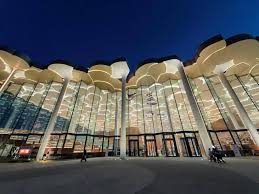
This conversation took place at the Metaverse Experience Hall of the Beijing Library. Supported by artificial intelligence (AI) and other emerging technologies, the hall offers visitors a novel approach to immersive reading and knowledge-based social engagement.

As one of three institutions under the Capital Library of China, the Beijing Library has introduced an AI-powered digital human modeled after renowned Chinese writer Lu Xun. Historically, Lu Xun played a role in establishing the predecessor of the Capital Library of China. Today, his digital incarnation symbolizes the library’s digital transformation.

“We developed the digital Lu Xun using AI technologies to provide guided tours, recommend books, and introduce local cuisine and cultural sites,” explained Fei Jun, professor with the School of Design, the Central Academy of Fine Arts, and creative director of the Metaverse Experience Hall. His team conducted in-depth research on Lu Xun’s life and works to create a realistic and multidimensional digital persona.

In addition to the digital Lu Xun, Fei’s team created two other digital characters, “Tutu” and “2122,” each with distinct personalities: one childlike and the other futuristic. These avatars, driven by large language models, engage visitors in conversations about literature and everyday life. Since the library opened at the end of 2023, these AI characters have participated in more than 1.7 million voice interactions.

Seven-year-old reader Wang Jiayi eagerly asked “2122” questions such as, “Why did dinosaurs go extinct?” and “Why do maple leaves turn red in autumn?” Her mother commented, “The digital humans are engaging and informative. They genuinely spark children’s interest in learning.”

Entering the library feels akin to stepping into a digital universe.

Visitors can scan a QR code to verify their identity, customize their attire, and quickly generate digital avatars within the Metaverse. These avatars can navigate virtual spaces such as the Children’s Library, Ancient Books Collection, Art Literature Library, and Intangible Cultural Heritage Library, exploring venue information and upcoming events.

Readers also interact with one another via their digital avatars, sharing reading lists, exchanging book reviews, and bridging online and offline reading experiences.

Looking ahead, the library plans to introduce additional immersive features, including personalized virtual study rooms. “Our goal is to offer a multisensory experience — visual, auditory, and even tactile — so users feel as if they’ve entered a parallel world for immersive reading,” Fei said. His team is also developing an online version of the metaverse library, enabling remote access to its digital environment and vast knowledge collections.

“Beyond traditional print books, we want to create a technology-enhanced environment that sparks curiosity and encourages readers to explore knowledge in innovative ways,” said Li Nianzu, deputy director of the Capital Library of China.

A closer look at China’s ‘appropriate forward planning’ for new infrastructure development

By Wang Junling

China is home to the world’s largest high-speed railway, expressway, and postal express delivery networks, as well as the world’s biggest and most extensive digital infrastructure. This increasingly modernized infrastructure system has supported rapid economic and social development, improving public services and enhancing everyday life.

Looking ahead to the next five years, how will China advance its infrastructure development? 

According to the recommendations for formulating the 15th Five-Year Plan, new types of infrastructure will be built with appropriate forward planning; information and communication networks, the national integrated computing network, major science and technology infrastructure, and other key systems will be further developed and used intensively and efficiently; traditional infrastructure will be upgraded and retrofitted with digital and intelligent technologies.

This marks the first time a Five-Year Plan recommendation explicitly incorporates the concept of “appropriate forward planning” for new infrastructure.

What does this concept entail, and how will China implement it?

As technologies such as artificial intelligence, blockchain, 5G, and digital twin become deeply embedded in daily life and economic activity, China has made significant strides in developing information infrastructure, integrated infrastructure, and innovative infrastructure. These new foundations underpin the digital economy, accelerate the modernization of traditional infrastructure, and support scientific and technological innovation.

According to Huang Qunhui, a research fellow at the Institute of Economics, Chinese Academy of Social Sciences, many sectors, including scientific research, transportation, energy, water conservancy, and communications, face strong demand for digital, intelligent and green upgrades amid a new round of scientific and technological revolution and industrial transformation. Among these, digital-intelligent infrastructure such as next-generation communication base stations, high-performance computing equipment, and ultra-large storage systems has become central priorities.

Zhang Liqun, a research fellow at the Development Research Center of China’s State Council, highlights the public good nature of infrastructure, in contrast to the exclusivity of ordinary commodities. In this context, “appropriate forward planning” implies that government investment in emerging infrastructure, such as communication networks, computing capabilities, and scientific research platforms, must stay ahead of evolving societal needs to ensure public services are both proactive and resilient.

“For example, the growth of emerging industries and the upgrading of traditional industries rely on services like real-time communication and artificial intelligence enabled by traditional infrastructure,” Zhang added. “Government-led investments must anticipate demand to close critical gaps in a timely manner.”

Infrastructure development is a complex undertaking that encompasses policy, funding, planning, and technology, requiring coordinated, well-designed implementation. According to Xiang Aibing, director of the transport integration and innovation research center at the Institute of Comprehensive Transportation of China’s National Development and Reform Commission, despite tremendous progress, China still faces structural weaknesses in new infrastructure and in meeting the higher standards of quality development and public expectations.

Challenges persist in central and western regions and in special zones, where full coverage of gas pipeline and mobile communication network is lacking. Rural areas still struggle with “last-mile” connectivity, and integration across transport, energy, and digital infrastructure remains insufficient.

“The term ‘appropriate’ reflects the need for infrastructure development to align with the pace of economic and social development, while ‘forward-looking’ emphasizes its guiding and enabling function,” Xiang noted. 

“During the 15th Five-Year Plan period (2021-2025), China must ensure that the supply of new infrastructure — its capacity, regional distribution, technological sophistication, implementation schedule, and scale — keeps pace with evolving development needs, creating a virtuous cycle of supply and demand,” Xiang added.

The resulting improvements in public services and growing market opportunities are drawing increasing attention from enterprises.

Li Qian, chairwoman of Net Zero, a tech firm based in northwest China’s Xinjiang Uygur autonomous region, said: “New infrastructure creates substantial opportunities for business expansion. We are making sustained investments, with appropriate forward planning, in computing power infrastructure to position ourselves for rising demand.”

Lunkr Technology (Guangzhou) Co., Ltd., the world’s first commercial company supporting the IETF multilingual email standard, provides digital solutions for clients in Thailand, Indonesia, South Africa, Zambia, and other countries. Wu Xiucheng, executive vice president of the company, noted that advancing new infrastructure with appropriate forward planning during the 15th Five-Year Plan period is a strategic move that enables digital industry growth and fosters new technologies and business models. 

“Going forward, we will scale up our AI-driven products and services to better capitalize on emerging opportunities in email systems and cybersecurity,” Wu added.

China advances from digitalization to intelligent digital transformation

By Liu Wenxin, People’s Daily

“Digital” and “intelligent” are two buzzwords in China’s recommendations for formulating the 15th Five-Year Plan, which calls for digital and intelligent development in the manufacturing sector, digital and intelligent transformation of the service sector, and upgrading and retrofitting traditional infrastructure with digital and intelligent technologies.

The evolution from “digital” to “digital and intelligent” reflects a deeper strategic shift. Digitalization involves the application of digital technologies to modernize and upgrade industrial and supply chains across the real economy. In contrast, intelligent digitalization builds upon this foundation by integrating technologies such as artificial intelligence (AI), enabling autonomous learning, optimized decision-making, and predictive analytics. This integration aims to enhance production efficiency, resource allocation, management, and innovation.

For example, a large supermarket chain under digitalization would collect real-time data on procurement, warehousing, and sales for analysis. Under intelligent digitalization, an AI system could dynamically adjust pricing and devise sales strategies based on factors like inventory levels and product shelf life.

This transition represents a strategic response to accelerating technological advancement. AI is emerging as a transformative technology on par with the steam engine, electricity, and the internet. Its rapid development is propelling the global economy into an era of intelligent transformation.

For instance, in synthetic biology factories, AI enables continuous, high-efficiency optimization of microbial fermentation, increasing efficiency tenfold. In high-speed train research and development, simulation models powered by AI have reduced aerodynamic calculation times from an entire day to mere seconds.

By emphasizing “intelligent digitalization,” the recommendations for formulating the 15th Five-Year Plan demonstrate China’s commitment to seizing the opportunities presented by AI and advancing its systematic application.

China is well-positioned to advance from “digitalization” to “intelligent digitalization.”

In recent years, China’s AI industry has grown rapidly and now ranks in the global top tier. China’s AI sector has seen robust growth, with the number of enterprises exceeding 5,300 as of September, accounting for 15 percent of the global total. The industry’s scale exceeded 900 billion yuan ($127.11 billion) in 2024, a year-on-year increase of 24 percent.

Computing power infrastructure continues to expand. As of the end of June 2025, China had 10.85 million standard racks in operation nationwide, with its intelligent computing power reaching 788 EFLOPS, ranking among the top in the world.

Algorithm innovation is also flourishing. China has released 1,509 large AI models, the highest number globally, accounting for a substantial share of the 3,755 models launched worldwide to date and supporting the global open-source ecosystem through models like DeepSeek and Qwen.

The transition from “digitalization” to “intelligent digitalization” hinges on the integration of AI across sectors to drive high-quality development. Effective AI advancement requires practical application. To this end, China is implementing the “AI Plus” initiative, which focuses on strengthening technological capabilities to foster the “intelligent industrialization” of AI while accelerating the intelligent transformation of traditional industries. These efforts aim to expand application scenarios, support the high-quality development of the AI industry, and enable AI to contribute more substantially and effectively to economic and social development.

Looking ahead, leveraging AI’s “multiplier effect” will provide a robust material and technological foundation for advancing Chinese modernization.

World’s first low-altitude wind tunnel launched in S China

By Lyu Shaogang, People’s Daily

For more than a century, humanity has pursued the dream of flight. Traditionally, aircraft have primarily operated in the stratosphere or over open areas, where airflow conditions are relatively straightforward. However, with the rise of the low-altitude economy, the troposphere below 1,000 meters above the ground is fast becoming a key arena for future transportation and industrial transformation.

Recently, the world’s first low-altitude wind tunnel facility was completed and inaugurated in Longhua district of Shenzhen, south China’s Guangdong province. Inside the state-of-the-art facility, 81 high-powered fans generate powerful gusts while a quadcopter drone undergoes rigorous testing, shaking under simulated level-8 wind conditions. Real-time data from load sensors feed directly into monitoring screens, offering valuable insights.

Developed by the Shensi Lab of the Shenzhen Institute for Advanced Study, University of Electronic Science and Technology of China, the facility is being hailed as the “ultimate test field” for low-altitude aircraft.

Low-altitude aircraft face significant engineering challenges due to the complex environmental conditions of the troposphere. According to Yang Jun, head of the Shensi Lab, “Commercial aircraft typically operate in the stratosphere, around 10,000 meters, where wind directions are more uniform. In contrast, the wind patterns in the troposphere are highly variable, with severe convective weather making flights below 1,000 meters particularly difficult.” Despite these challenges, the troposphere is vital for emerging applications, including logistics delivery, emergency response, and urban transportation.

The aviation industry has long adhered to the principle: “No wind tunnel, no flight.” Since the Wright brothers built their first wind tunnel in 1901, wind tunnels have played an essential role in flight testing. Yet, among over 1,000 wind tunnels worldwide, few are capable of replicating the dynamic, complex atmospheric conditions of low-altitude urban environments. To evaluate the wind resistance and flight performance of low-altitude aircraft in turbulent, real-world conditions, engineers have often had to rely on chasing storms.

To address this gap, the Shensi Lab developed the world’s first low-altitude wind tunnel facility capable of precisely simulating urban wind conditions, including street-canyon winds, heat island effects, wind shear, and downbursts. This provides scientific support for defining safe operational boundaries for low-altitude aircraft.

The facility consists of two chambers: an outer chamber with a diameter of 18 meters and an inner chamber measuring 10 meters. Aircraft with wingspans up to four meters can be tested for aerodynamic characteristics, flight-control performance, and safety across a range of scenarios including vertical takeoff and landing, cruising, and hovering. The wind tunnel features a “fan matrix” design, incorporating three fan arrays arranged in different directions, along with a bottom-flow array. It can generate wind speeds of up to 60 meters per second, with a response time of under two seconds. 

Additionally, the facility can control temperature and humidity and simulate rain, snow, and hail, offering a comprehensive reproduction of urban low-altitude weather for safety testing. Since its launch, the wind tunnel has supported the research and development of small and micro low-altitude aircraft for several companies.

Looking ahead, low-altitude aviation holds vast development potential. Imagine booking a “custom flight” to travel 100 kilometers in just half an hour at speeds of 200 to 300 kilometers per hour. Envision commuting not by walking down to the street but by taking off from the rooftop. Point-to-point urban travel, once thought to be the stuff of science fiction, may soon be a reality.

“The low-altitude economy is not about isolated technologies. It depends on the coordinated efforts of the entire industrial chain,” Yang said. With no unified global standards yet established for urban low-altitude flight, original research is necessary to create independent scientific and industrial systems, positioning China to become a global leader and standard-setter in this field.

Looking to the future, the Shensi Lab plans to develop an even larger low-altitude environmental simulation facility, with an outer chamber diameter of 65 meters and an inner chamber diameter of 45 meters. This facility will support studies, validation, and testing for medium- and large-sized low-altitude aircraft, including drone swarms, with wingspans of up to 17 meters. Once completed, it will complement the existing wind tunnel, forming a complete testing ecosystem for the development of low-altitude aircraft.

Japan’s so-called ‘undetermined status of Taiwan’ argument represents ignorance of history, misjudgment of reality

By Zhong Sheng, People’s Daily

Japanese Prime Minister Sanae Takaichi has repeatedly made erroneous statements on the Taiwan question, exposing her deep-rooted tendency toward historical revisionism and a fundamental misjudgment of the current international political reality.

At a recent debate with opposition party leaders, Takaichi said that “having renounced all rights and claims under the Treaty of San Francisco, we are not in a position to recognize Taiwan’s legal status.” This notion that “Taiwan’s status is undetermined” is a distortion of historical fact, echoing her earlier erroneous remark that a “Taiwan contingency” could constitute a “survival-threatening situation” for Japan. Such statements once again lay bare her real intention to undermine the post-war international order and pave the way for Japan’s military involvement in Taiwan-related affairs.

Taiwan is part of China. This statement has a sound basis in history and jurisprudence. 

In April 1895, Japan seized Taiwan and the Penghu Islands through an unequal treaty. The Cairo Declaration, issued by China, the United States, and the United Kingdom on Dec. 1, 1943, stated that it was the purpose of the three allies that all the territories Japan had stolen from China, such as Northeast China, Taiwan and the Penghu Islands, should be restored to China. 

The Potsdam Proclamation was signed by China, the United States, and the United Kingdom on July 26, 1945, and subsequently recognized by the Soviet Union. It reiterated: “The terms of the Cairo Declaration shall be carried out.” In September of the same year, Japan signed the Instrument of Surrender, in which it promised that it would faithfully fulfill the obligations laid down in the Potsdam Proclamation. 

These documents, all possessing binding force under international law, constitute a complete legal framework confirming China’s recovery of Taiwan. Taiwan’s restoration to China is a manifestation of justice and a key outcome of the victory in World War II. Any erroneous claim of “undetermined status of Taiwan” is a deliberate distortion of this legal and historical reality and a blatant challenge to the post-war international order.

It must be emphasized that the so-called “Treaty of San Francisco” was issued in the early 1950s by certain Western countries seeking Cold War geopolitical calculations. It excluded important parties to the World War II, such as the People’s Republic of China and the Soviet Union, in order to seek a separate peace deal with Japan.

The document goes against the provision of not making a separate armistice or peace with the enemies in the Declaration by United Nations signed by 26 countries in 1942, including China, the United States, the United Kingdom and the Soviet Union, and violates the UN Charter and the basic principles of international law. Anything set out in the treaty on the sovereignty over Taiwan or the handling of the territory and sovereign rights of China as a non-signatory, constitutes a deviation from legally binding documents such as the Cairo Declaration and the Potsdam Proclamation, and is thus entirely illegal and null and void.

By selectively disregarding the legal documents that underpin the post-war international order and instead invoking an exclusionary and legally flawed treaty, Takaichi not only distorts historical truth but also undermines universally recognized norms governing international relations.

Takaichi’s assertion that “Japan is back” raises a fundamental question: What kind of Japan is back? 

If the statement refers to a Japan that has drawn lessons from its wartime history, acknowledges the consequences of its militarist past, and reaffirms its commitment to the Pacifist Constitution as it returns to the international community as a normal country, such a trajectory is unobjectionable. 

However, if it suggests the resurgence or emboldened reemergence of Japanese militarism, then the international community must remain highly vigilant. 

Taiwan offers a stark example of the legacy left by Japanese militarism, marked by oppressive colonial rule and heinous crimes against humanity. 

During Japan’s half-century of forced occupation and colonial rule, hundreds of thousands of people in Taiwan were killed. The local population was deprived of political rights, freedom of religion, and cultural expression, while the island’s mineral resources and essential supplies were exploited for imperial gain. 

Notable atrocities underscore this dark chapter: the Yunlin Massacre claimed the lives of approximately 30,000 local civilians; the Taoyuan Sanjiaoyong Massacre saw 25,000 people slaughtered; in the Xiaolong Massacre, 27,000 were brutally killed.

These events are not distant history. Today, as Japanese right-wing politicians clamor that a so-called “Taiwan contingency” is a “Japan contingency,” such rhetoric constitutes a provocative revival of colonial ambition and serves only to deepen historical wounds that have yet to fully heal.

Taiwan is China’s Taiwan. The Taiwan question lies at the very heart of China’s core interests. Eighty years ago, China was capable of defeating Japanese militarism; today, the Chinese government and people are even more resolute, confident, and capable of countering any attempt to interfere in China’s internal affairs or hinder China’s reunification. 

We sternly warn certain Japanese politicians: those who play with fire on the Taiwan question will only burn themselves. Given Japan’s grave historical responsibility, it must speak and act with extreme prudence, engage in serious historical reflection, and immediately cease all provocations concerning Taiwan to avoid repeating the mistakes of the past.

(Zhong Sheng is a pen name often used by People’s Daily to express its views on foreign policy and international affairs.)

Three defining features of China’s super-sized market

By People’s Daily reporters

In today’s global economy, the market has become a scarce and strategic resource. For China, a robust domestic market serves as a strategic pillar of its modernization drive.

Advancing the development of a unified national market and maximizing the strengths of China’s enormous market are key priorities in China’s recommendations for formulating the 15th Five-Year Plan. Strategic objectives have been established to cultivate a resilient and dynamic  domestic market.

In practice, China’s super-sized market demonstrates three defining features: its leading role, stability, and growth potential. These qualities provide a clear framework for further leveraging the advantages of such a large market.

A market with a leading global role

China’s vast consumer demand fuels innovation and creativity, while its high-quality supply capabilities shape the trends of the times. The scale and depth of its market — marked by diverse application scenarios, efficient industrial collaboration, and a supportive innovation ecosystem — continue to attract global innovation resources, amplifying its capacity for technological breakthroughs and international impact.

Innovative developments in areas such as autonomous driving and the sharing economy illustrate how consumption growth is increasingly driven by innovation. In the first three quarters of this year, China registered 19.922 million new consumer goods registered via barcodes, an increase of 31.4 percent year on year, demonstrating sustained consumption momentum.

As new sectors such as the low-altitude economy and embodied intelligence gain traction, China is accelerating the integration of scientific and technological innovation with industrial innovation. This synergy is cultivating fertile ground for frontier technologies and future industries, making China an increasingly attractive hub for global science and innovation capital.

Saadia Zahidi, managing director of the World Economic Forum, said that China’s expansive market, open and inclusive investment environment, and stable policy outlook make it a compelling destination for global enterprises.

Over the past five years, China’s photovoltaic industry has significantly reduced global application costs; annual exports of new-energy vehicles have surpassed two million units for the first time; and the country’s advancements in smart manufacturing have captured global recognition. Additionally, livestream e-commerce originating in China has inspired widespread global adoption. When a technology gains momentum in the Chinese market, it benefits from the scale, infrastructure, and innovation ecosystem necessary for rapid expansion and global influence, underscoring the Chinese market’s leading role as a global trendsetter.

A market marked by stability

Market size underpins strategic composure, while institutional advantages enhance governance efficiency.

This year, China produced nearly 30 new energy vehicles, handled more than 370,000 express parcels and exported over 30 million yuan worth ($4.22 million) of mechanical and electrical products per minute on average. These remarkable achievements highlight the dynamism and resilience of the Chinese market.

Retail sales of consumer goods in China grew 5.5 percent on average annually over the past four years; automobile production and sales have remained the highest in the world; the country has achieved the $700 billion investment attraction target six months ahead of schedule; and its economic output has surpassed 130 trillion yuan. These results during the 14th Five-Year Plan period (2021-2025) speak to the strength of China’s market.

A major economy’s advantage lies in its capacity for robust internal circulation. China boasts the world’s most complete and largest industrial system, supported by a population of more than 1.4 billion, including 250 million people with higher education. The nation is undergoing rapid industrialization, informatization, urbanization, and agricultural modernization. This combination ensures both strong supply-side capabilities and substantial domestic demand.

The stability of China’s market is underpinned by stable expectations, a diverse set of macroeconomic regulations, and long-term strategic planning. Under the socialist market economy, China effectively merges the efficiencies of a market-driven system with the coordination capacity of a capable government. This synergy ensures that the super-sized market remains vibrant, resilient, and well-regulated.

A market with significant growth potential

Demographic shifts are expanding the space for development, while comprehensive reform and opening up continue to unlock new economic dividends.

China is transitioning from a middle-income country toward a high-income one, with the goal of becoming a moderately developed country. In the next decade and beyond, its middle-income population is expected to exceed 800 million. Areas of unbalanced or insufficient development represent untapped investment potential, while rising demand for a better quality of life is creating new consumption growth points.

The Chinese market’s growth potential is closely tied to deepening reform. China is continuously shortening its negative list for market access, abolishing regulatory barriers that hinder the formation of a unified national market and fair competition, and ensuring that new policies align with broader macroeconomic objectives.

By accelerating the development of a unified national market and fostering a first-class business environment that is market-oriented, law-based, and internationalized, China is enabling the efficient flow of production factors and unlocking broad-based creativity and market vitality.

As Joe Ngai, chairman of McKinsey & Company in Greater China, put it, “China’s vast market and innovative capabilities are difficult to replicate elsewhere.”

With a focus on institutional opening up, leveraging the strength of its large market to drive internal economic circulation, and focusing on effective domestic governance, China will continue to inject sustained dynamism into the global economy. Its ongoing development will continue to generate new opportunities worldwide.

From industry to itinerary: China taps manufacturing strengths for tourism growth

By Lyu Xiaoxun, People’s Daily

How do mega infrastructure projects become popular tourist destinations? 

At the Huajiang Grand Canyon Bridge in southwest China’s Guizhou province, the world’s longest-span and tallest bridge, is drawing significant visitors. Beyond its engineering marvel, it features a 1,000-square-meter glass observation hall, along with low-altitude skydiving and bungee jumping facilities, turning infrastructure into a thrilling tourist attraction.

How do frontline production sites transform into experiential learning spaces? 

At the Jiangnan Shipyard in Shanghai, visitors collaborate to assemble ship models and explore vessel construction and dismantling processes — an immersive, educational activity welcomed by students and teachers alike.

Across China, traditional “Keep Out” signs are being replaced with “Welcome” mats as industrial tourism gains momentum. Increasingly, innovative and experiential tours are redefining public engagement with industry, offering deeply informative and sometimes romanticized journeys through China’s industrial heartland.

What makes industrial tourism so appealing? And why are consumers drawn to industrial aesthetics?

Industrial tourism captivates not merely through landscapes but by revealing the narrative of a major manufacturing nation, including its challenges, achievements, and transformation. It invites visitors to engage with the tangible legacy of industrial progress.

At the Yumen Oilfield in northwest China’s Gansu province, a key site of revolutionary tourism, visitors can smell crude oil, feel its texture, and trace the formation and extraction process, gaining a visceral understanding of the dedication and pioneering spirit of generations of oil workers.

At the Wenchang International Aerospace City in south China’s Hainan province, envisioned as the country’s first commercial spaceflight, crowds of “rocket chasers” gather to witness launches up close, experiencing China’s steady march toward becoming a leading nation in aerospace and science and technology.

Unlike traditional sightseeing, industrial tourism offers a unique perspective on industrial innovation and technological transformations. It chronicles China’s evolution from catching up to taking the lead, from overcoming critical technological “bottlenecks” to closing technological gaps. China’s national industrial heritage sites and tourism bases serve as living archives of perseverance and progress, reflecting the enduring spirit of the Chinese people.

Industrial tourism goes beyond novelty; it fosters meaningful engagement with the realities of manufacturing and modern life. Immersive experiences allow visitors to understand not only how products are made but also the ingenuity driving their creation.

At the Tsingtao Brewery Museum in east China’s Shandong province, the popular live-action show “The Awakening Brewer” often sells out morning sessions. As visitors follow the narrative, they sample beer-yeast bread and malt tea, experiencing an enjoyable fusion of culture, craftsmanship, and flavor.

At the Sanmen Nuclear Power Plant in Taizhou, Zhejiang province, visitors can wear uniforms and operate a simulated control panel. This hands-on activity offers a rare glimpse into the stability and safety protocols of China’s nuclear energy sector, deepening public appreciation for advanced energy infrastructure.

Factory tours and workshop visits satisfy public curiosity and the growing appetite for experiential learning. They expand horizons, provide leisure opportunities, and spark imagination and innovation. For operators, interactive and accessible programs enrich service offerings, enhance public understanding of industrial processes, and strengthen brand recognition and social credibility. As destinations and visitors engage more closely, a virtuous cycle emerges, fueling growth in the cultural and tourism sector.

Beyond showcasing products and infrastructure, industrial tourism also communicates development philosophies and cultural values. It promotes new pathways to high-quality development that prioritize ecology, conservation, and green, low-carbon practices. These experiences allow visitors to connect with both China’s collective memory and its vision for the future.

In Fanshan township of Cangnan county, Wenzhou, Zhejiang, ecological restoration of abandoned mines has been integrated with the revitalization of miners’ villages and industrial sites. Last year, the township’s tourism revenue reached approximately 44 million yuan ($6.21 million), exemplifying the principle that “lucid waters and lush mountains are invaluable assets.” 

At the Meishan Iron and Steel industrial cultural tourism zone in Nanjing, Jiangsu province, successive ultra-low-emission upgrades have reduced energy consumption per ton of steel for three consecutive years. The addition of ecological features, such as micro-wetlands and fish ponds, has attracted native wildlife like egrets and black kites, drawing over 500,000 visitors annually. The park demonstrates that “rust belts” can be reimagined as “scenic belts.”

Today, production lines are not only engines of industry but also key assets in tourism development. Leveraging China’s extensive industrial heritage, and supported by coordinated efforts from both government and industry, industrial tourism is well-positioned to unlock new momentum for sustainable growth and expanded domestic consumption.

Security Agencies Uncover Plot to Stage Protest Against President Tinubu, NSA Ribadu

Nigeria’s security agencies have reportedly uncovered a plan by some opposition politicians to organise protests in Sokoto and other northern states against President Bola Tinubu and National Security Adviser Nuhu Ribadu.

Fresh intelligence reports made available to journalists on Friday show that former Senator Kabiru Marafa is the main arrowhead of the plot.

The group is allegedly working to discredit NSA Nuhu Ribadu and the Minister of State for Defence, Bello Matawalle, by falsely linking them to bandit groups and using a Sokoto-based militia to trigger violent protests.

Sources say the Zamfara State Government, led by Governor Dauda Lawal, is strongly backing the plan and providing funding, determined to paint the federal security team as incompetent and force the removal of both Ribadu and Matawalle.

Security operatives detected the scheme this week, monitored several planning meetings in Gusau and Abuja, blocked funding channels, and quietly disrupted the operation.

No arrests have been made, but all the key figures are now under close surveillance.

The key figures are now being monitored by security agencies to track their key sources of funding.

Engineering the ocean: China’s smart vessels transform aquaculture industry

By Li Rui, People’s Daily

With a few taps on her phone, Ms. Cui, a resident of Shanghai’s Pudong district, ordered fresh deep-sea large yellow croaker. Within 24 hours, a box of the freshly harvested fish — tender and fragrant when cooked — was delivered to her doorstep.

These croakers were raised off the coast of Zhoushan, east China’s Zhejiang province, aboard Guoxin No.1 2-1, the world’s first 150,000-ton smart aquaculture vessel. As an upgrade to the earlier 100,000-ton Guoxin No.1, this vessel began trial operations on April 17 this year. It welcomed more than 1 million juvenile croakers in early May and, by November, had successfully harvested over 46,000 croakers in a single catch.

“Wherever the water is the best, that’s where we go,” said Sun Linlin, production director of the vessel. Equipped with a mobile, ship-based tank system, the vessel follows ideal temperatures, water quality, and ocean currents, much like herders seeking the best pastures, to ensure the fish remain in a stable and natural environment.

Inside the vessel’s aquaculture monitoring room, a large digital screen presents real-time data on current velocity, dissolved oxygen, water temperature, and feed volume. “Each tank is equipped with an advanced environmental control system,” Sun explained. “Although enclosed, the water remains in continuous circulation, supporting natural purification and keeping the fish active and healthy.”

This “ocean ranch” includes 15 standard aquaculture tanks for large-scale commercial farming; four circular raceway pools that serve as both exercise zones and transition areas for mid-sized juveniles; and 22 experimental tanks for feed comparison, drug-sensitivity tests, and other research. The total water volume exceeds 96,000 cubic meters. 

How many people are required to operate such a massive facility? Just 35 staff members, and only 16 are directly involved in fish breeding.

“The entire vessel is supported by an integrated, high-efficiency farming control system,” Sun said. More than 200 cameras and 2,000 sensors make up an intelligent monitoring network that enables remote oversight and targeted management. “Take feeding as an example. Each aquaculture tank requires 1 to 1.5 tons of feed per day. Thanks to automated loading, rail-guided distribution carts, localized storage bins, and scheduled delivery, just two staff members can manage feeding operations for the entire vessel each day.”

From fry stocking and automated feeding to harvesting and processing, nearly all key steps aboard Guoxin No.1 2-1 are mechanized. The vessel’s mechanization rate exceeds 90 percent, automation has increased by 45 percent, and nearly 30 percent of farming decisions are made by intelligent systems, resulting in a 20 percent reduction in labor costs.

“In total, the vessel incorporates more than 160 technological breakthroughs and innovations across functional design, aquaculture systems, new-energy applications, and integrated information platforms,” Sun noted.

This innovation ecosystem is catalyzing broader upgrades across the broader marine fishery sector. On the feed side, specialized formulations and intelligent software enable precision nutrition. In logistics, coordinated ship-to-shore cold-chain systems ensure delivery within six hours for 500 kilometers and within 15 hours for 1,000 kilometers. In processing, stable, high-quality raw materials from the vessel support a range of products from chilled fresh fish to ready-to-cook and premium prepared foods, meeting diverse market demands.

The bumper harvest of yellow croaker from Guoxin No.1 2-1 marks just the beginning. The recent delivery of Guoxin No.1 2-2, designed primarily for high-value cold-water species such as salmon and trout, signals continued expansion. Once all three vessels in the Guoxin No.1 series reach full production, their combined annual output is expected to exceed 10,000 tons.

“With large-scale aquaculture vessels, we’re no longer constrained by weather or geography. We can raise southern species in northern waters and northern species in southern waters, achieving seasonal balance in production. This industrialized approach significantly enhances efficiency and resource utilization, transforming the deep sea into a sustainable ‘blue granary,'” Sun said.